Leave Your Message
0%

Picking the best tracksuit for sports manufacturers worldwide isn’t just about comparing price tags or factory photos. These days, buyers dig deeper: fabric recovery, seam strength, sizing consistency, traceability, delivery reliability—all of it matters. A tracksuit has to hold up through wash after wash, outdoor training, travel, and weather that changes on you mid-session. Honestly, small details count. A zipper that glides, a pocket that’s reinforced, a waistband that stays put—that can change how an athlete feels every day.

And the market data backs up why this deserves a closer look. McKinsey & Company and the World Federation of the Sporting Goods Industry found that sporting-goods growth has cooled off after the pandemic boom, which puts more pressure on brands to show clear value. Grand View Research still expects the global sports apparel market to keep expanding through 2030, though forecasts vary by region and product category. That gap is worth noticing. Numbers are helpful, sure—but they can’t replace checking things at the factory level.

Textile Exchange’s Materials Market Report 2024 named polyester the dominant fiber in global production, while recycled polyester keeps gaining commercial weight. So responsible sourcing has to be part of any serious manufacturer review. High-Quality Sports Tracksuit Factories should be able to show material certificates, lab test records, production samples, and clear info about subcontracting. Auditors should also look at colorfastness, pilling resistance, fabric weight, and shrinkage after washing. A factory might nail the samples and still struggle with bulk consistency. Uncomfortable? Yes. Important? Definitely. This guide compares manufacturers using practical evidence, technical capability, communication quality, and measurable production controls. No ranking is perfect. But a disciplined review can still help brands choose partners with more confidence.
Top Tracksuit For Sports Manufacturers Worldwide

Definition and Role of Tracksuits in Modern Sportswear

A tracksuit is a coordinated jacket and trouser set designed for movement, warm-up, recovery, and everyday athletic use. Its role has expanded beyond the changing room. Grand View Research estimates that the global sports apparel market reached approximately USD 248.9 billion in 2023. This growth reflects demand for clothing that performs during training but remains comfortable on commutes and rest days.

In practical terms, a modern tracksuit should manage moisture, permit full hip and shoulder movement, and resist repeated washing. A brushed inner layer can retain warmth during outdoor drills. Ventilated panels may reduce heat around the back and underarms. The garment must also fit without restricting a deep squat or a running stride. Small details matter. Secure pockets matter too.

The World Health Organization reported that about 31% of adults worldwide were insufficiently active in 2022. Accessible sportswear may support more regular movement, although clothing alone cannot change behavior. For a China ODM Sports Tracksuit Manufacturer, product development should combine fabric testing, size consistency, seam strength, and transparent performance claims. Laboratory results are useful, but field trials reveal different problems. A zipper may catch during stretching. Trousers may twist after washing. These flaws are easy to overlook. The definition of a tracksuit is simple; delivering reliable performance is not.

Key Features of High-Quality Sports Tracksuits

High-quality sports tracksuits begin with fabric performance, not appearance. A 2024 Grand View Research report valued the global sports apparel market at over USD 200 billion. That scale raises buyer expectations for comfort, durability, and responsible production. Polyester remains widely used because it dries quickly and holds shape. However, fabric weight must match the sport. Lightweight mesh suits warm training, while brushed fleece supports outdoor sessions.

Fit is equally important. A reliable tracksuit should allow full shoulder rotation, deep lunges, and repeated washing without twisting seams. Flatlock stitching can reduce rubbing around the neck and inner thigh. Elastic cuffs should recover after stretching, but they should not leave harsh marks. Practical testing matters. A China OEM Sports Tracksuit Manufacturer should check shrinkage, colorfastness, seam strength, and zipper performance before bulk production.

The Textile Exchange Materials Market Report 2024 identifies polyester as the leading fiber in global production. This makes recycled polyester worth considering, especially for teamwear programs seeking lower material impact. Still, recycled content alone does not prove quality. Suppliers should provide test records and clear fiber percentages. No fabric is perfect. Some moisture-wicking finishes lose effectiveness over time, and pale colors may show sweat sooner. Buyers should review wash-test results, not rely only on sample photos. Fresh ideas help, but measurable evidence is safer.

Top Tracksuit Features for Sports Manufacturers Worldwide

Typical quality benchmarks for performance-oriented sports tracksuits, rated on a 5-point scale.

High-quality tracksuits generally prioritize moisture management, freedom of movement, durability, breathability, and weather protection. The benchmark scores represent practical design priorities commonly used when evaluating performance sportswear specifications.

Leading Tracksuit Manufacturing Regions Worldwide

Tracksuit production is shaped by regional expertise, material access, and export infrastructure. China remains a major manufacturing hub for large-volume sportswear. Its factories often provide advanced cutting, printing, and automated sewing equipment. Vietnam has grown through reliable apparel production and improving technical-fabric capabilities. Bangladesh is highly experienced in efficient garment assembly, especially for cost-sensitive orders.

Turkey connects strong textile mills with convenient access to European markets. Its manufacturers can support shorter transport routes and flexible production schedules. Portugal offers skilled workmanship, smaller production runs, and careful finishing. Pakistan also has deep experience with knitted fabrics and sports clothing. Each region has different strengths, but none is perfect.

A Global Custom Sports Tracksuit Supplier should show more than attractive samples. Buyers should check fabric weight, colorfastness, pilling resistance, seam strength, and washing performance. Factory audits and production records can reveal whether quality remains stable after bulk orders. Clear communication matters when measurements change across several size ranges. Some suppliers promise fast delivery too easily. That deserves careful questioning. Sample approval, inspection points, and shipment terms should be documented before production begins. Regional sourcing decisions should also consider worker safety, environmental controls, and transparent material traceability.

Materials and Technologies Used in Tracksuit Production

Modern tracksuit production starts with material selection, not styling. Polyester remains dominant because it is light, abrasion-resistant, and quick-drying. Textile Exchange reported that polyester represented about 57% of global fiber production in 2023. Recycled polyester can reduce dependence on virgin feedstock, although its performance depends on fiber quality and processing controls. No material is perfect.

Fabric construction shapes athletic comfort. Warp-knit panels provide stretch and ventilation, while tightly woven shell fabrics resist wind during outdoor training. Elastane is often blended into side panels and waistbands for controlled recovery. Moisture-management finishes move sweat across the fabric surface, where it evaporates faster. Some factories now use dope dyeing, which colors polymer before extrusion and can reduce water use compared with conventional dyeing. The result feels practical: a smooth jacket, dry inner panels, and cuffs that remain stable after repeated movement.

Production technology also affects reliability. Computerized cutting reduces layout waste, while automated flatlock sewing helps prevent chafing at shoulder and inner-leg seams. Digital pattern systems support size grading with fewer physical samples. The Ellen MacArthur Foundation has identified textile waste as a major circularity challenge, so manufacturers should design tracksuits for repair, mono-material recycling, and longer use. That is still difficult when elastane, coatings, zippers, and mixed fibers are combined. Better testing is needed. Factories should measure colorfastness, pilling, seam strength, drying time, and dimensional stability after washing, rather than trusting appearance alone.

How Sports Tracksuit Manufacturers Are Evaluated

Top Tracksuit For Sports Manufacturers Worldwide

How Sports Tracksuit Manufacturers Are Evaluated

Evaluating a sports tracksuit manufacturer requires more than checking photographs or quoted prices. Experienced buyers inspect fabric weight, stretch recovery, breathability, and seam construction. A useful sample should feel balanced during movement, not merely look attractive on a table. Test garments should survive repeated washing, color rubbing, zipper use, and outdoor training. Small details matter. Loose threads often reveal weak production control.

Technical expertise appears in pattern development and size consistency. Manufacturers should explain how they grade sizes, reduce fabric waste, and manage moisture control. Reviewers can compare measurement charts with physical samples across several sizes. They should also examine stitching around pockets, cuffs, collars, and high-tension areas. Fit claims need evidence. A comfortable medium size does not guarantee a reliable full-size range.

Authority depends on documented testing, qualified personnel, and transparent factory processes. Reliable manufacturers provide material specifications, inspection records, production timelines, and traceable supplier information. Independent quality checks can confirm colorfastness, shrinkage, and seam strength. Communication is another practical measure. Delayed answers may signal deeper coordination problems. Still, no scorecard is perfect. A strong factory can make an occasional mistake, while a polished sample may hide inconsistent bulk production. Careful buyers should review corrective actions, not just promises, before approving large orders.

Top Tracksuit For Sports Manufacturers Worldwide - How Sports Tracksuit Manufacturers Are Evaluated
Evaluation Dimension Metric Recommended Reference Benchmark Common Test Method or Standard Why It Matters
Fabric Performance Fiber composition Specify the exact blend and tolerance, such as polyester, recycled polyester, elastane, or cotton; composition tolerance should be agreed before production. ISO 1833 series or an equivalent fiber-composition method Confirms that the supplied fabric matches the approved specification and expected durability, stretch, and care performance.
Fabric Weight Fabric mass per unit area Lightweight training fabric: approximately 120–180 g/m²; midweight tracksuit fabric: approximately 180–280 g/m². ISO 3801 Affects warmth, drape, breathability, shipping weight, and seasonal suitability.
Dimensional Stability Dimensional change after laundering Preferably within ±3% for key garment length and width measurements after the specified care cycle. ISO 5077 with laundering procedures from ISO 6330 Limits shrinkage, twisting, and size inconsistency after washing.
Color Performance Colorfastness to domestic and commercial laundering Target grade 4 or higher for color change and adjacent-fabric staining on a 1–5 grey scale. ISO 105-C06 Helps prevent fading and color transfer during normal garment care.
Color Performance Colorfastness to perspiration Target grade 4 or higher for color change and staining under acidic and alkaline conditions. ISO 105-E04 Important for sportswear exposed to sweat, heat, and repeated physical activity.
Pilling Resistance Surface fuzzing and pilling Target rating 4 or higher after the agreed number of rubbing cycles; the required rating should reflect the intended use. ISO 12945-2 Indicates how well the surface maintains its appearance during repeated wear and washing.
Abrasion Resistance Resistance to surface wear Set a project-specific cycle target; higher cycle performance is generally preferred for knees, elbows, seat areas, and side panels. ISO 12947-2 or ISO 12947-3 Evaluates the likelihood of holes, thinning, or visible wear in high-contact areas.
Seam Construction Seam strength and seam slippage Use a documented minimum strength by fabric type and construction; critical seams should meet the buyer-approved specification without visible opening under load. ISO 13935-2 for seam tensile strength; ISO 13936 series for seam slippage Reduces the risk of seam failure during stretching, training, and repeated laundering.
Stretch and Recovery Fabric extension and recovery Define both stretch direction and recovery requirement; performance fabrics should return close to their original dimensions after repeated extension. ASTM D2594, ASTM D3107, or another buyer-approved stretch and growth method Supports freedom of movement while minimizing bagging at knees, elbows, waistbands, and seat areas.
Moisture Management Liquid moisture transport For performance-focused garments, require documented wicking or moisture-management results rather than relying only on fiber claims. AATCC TM195 or an equivalent moisture-management test Shows how effectively the fabric spreads and transports perspiration away from the skin.
Breathability Air permeability Set the target according to fabric weight, knit or woven construction, intended climate, and whether wind resistance is required. ISO 9237 Balances ventilation and comfort during training without treating high air permeability as universally better.
Garment Fit Measurement accuracy Use an approved size chart and measurement tolerance, commonly around ±0.5–1.0 cm for many key points, depending on garment size and construction. Buyer measurement specification and an approved pre-production sample Improves size consistency across production lots and reduces returns caused by fit variation.
Hardware Quality Zipper and trim function Zippers, cords, snaps, and adjusters should operate smoothly and remain securely attached after repeated opening, closing, and laundering tests. Component-specific internal test protocol and approved sample comparison Protects usability and reduces failures in pockets, front openings, cuffs, and waist adjustments.
Chemical Safety Restricted substances control All materials should comply with the destination market’s applicable chemical restrictions and the buyer’s restricted-substances list. Applicable regulations such as REACH requirements and laboratory chemical screening Supports consumer safety, import compliance, and responsible material management.
Production Quality Defect control Use a documented inspection plan with agreed critical, major, and minor defect limits; critical defects should not be accepted. ANSI/ASQ Z1.4 or an equivalent statistical sampling procedure Creates a consistent method for evaluating workmanship, labeling, stitching, stains, holes, and measurement deviations.
Traceability Material and batch records Maintain records for fabric lots, trims, color approvals, test reports, production dates, and inspection results. Document-control and lot-traceability procedure Makes it easier to investigate defects, repeat approved colors, and manage corrective actions.
Delivery Capability Sampling and production reliability Evaluate sample approval accuracy, production lead-time consistency, on-time delivery rate, and capacity for repeat orders using historical records. Purchase-order records, production schedules, and delivery-performance reports A technically strong product is less valuable if the manufacturer cannot reproduce quality or meet agreed delivery dates.

Customization and Private Label Manufacturing Options

Choosing a Global Leading Sports Tracksuit Factory means looking beyond low production prices. Reliable customization starts with a clear technical pack, accurate measurements, and practical fabric selection. Manufacturers should review polyester blends, brushed fleece, mesh panels, zippers, and moisture control before cutting begins. These details affect comfort during warm-ups, travel, and outdoor training.

Private label manufacturing can include custom colors, woven labels, printed logos, care tags, packaging, and unique trims. A professional factory should provide size grading, digital artwork checks, sample development, and production updates. Requesting a physical sample is essential. Photos alone cannot show seam strength or fabric weight. Small fitting problems often appear at the shoulders, cuffs, or waistband. They are easier to correct before bulk production.

A dependable production partner also uses documented quality inspections. Checks should cover stitching, color consistency, measurements, labeling, and packing accuracy. Manufacturing experience matters when orders involve several sizes or seasonal fabrics. Communication should remain direct and recorded. No sampling process is perfect. A first sample may still need adjustment, especially for oversized or performance-focused designs. That honest review protects the final collection and reduces avoidable waste. Suppliers should also explain lead times, minimum order quantities, material availability, and applicable product requirements before accepting an order. Clear expectations build a stronger private label program.

Global Trends Shaping the Tracksuit Industry

The global tracksuit industry is moving beyond simple teamwear. Manufacturers now design for commuting, training, travel, and relaxed daily use. Comfort now leads. Soft stretch fabrics, breathable panels, and adjustable cuffs support longer wear. However, loose silhouettes do not suit every market or body type. Fit still matters.

Sustainability is shaping material choices and factory decisions. Recycled polyester, lower-impact dyes, and reduced packaging are increasingly requested by buyers. Factory audits also examine water use, worker safety, and production consistency. A recycled claim means little without traceable material records. Manufacturers must verify fiber content, colorfastness, seam strength, and labeling accuracy before shipment. These details protect customer trust and reduce costly returns.

Digital commerce is changing product development worldwide. Sales data can show which colors, sizes, and fabric weights perform across regions. Manufacturers are responding with smaller production runs and faster sampling. This approach reduces excess inventory, though it can raise unit costs. Regional climate also influences design. Lightweight mesh works well in humid areas, while brushed interiors suit colder training environments. Local preferences remain difficult to predict. A design that succeeds in one country may feel unsuitable elsewhere. Experienced manufacturers therefore combine market data with buyer feedback, wear testing, and practical factory knowledge. Forecasts remain imperfect, but careful testing usually exposes weaknesses before large-scale production begins.

Custom Sublimation Polo Shirts: Breathable, Branded Uniforms for Business and Sports

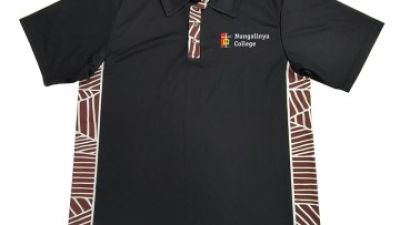
Custom sublimation polo shirts offer a practical way to create breathable, branded uniforms for business teams, schools, sports groups, and event staff. This design combines a clean black base with distinctive Indigenous-inspired patterns placed along the sides and placket, creating visual interest without sacrificing its modern, professional shape. A subtle custom logo on the chest adds identity while keeping the overall appearance polished and versatile.

Made from lightweight polyester, the shirt supports airflow and moisture management during active workdays, practices, competitions, or outdoor events. Its fabric helps move perspiration away from the skin, while the structured collar and neatly finished front maintain a sharp appearance throughout the day. Durable stitching reinforces the garment for frequent wear, making it suitable for coordinated uniforms and repeated team use.

High-quality sublimation printing integrates the design into the fabric, helping the colors stay vivid and resistant to fading after regular washing. The combination of breathable performance, cultural character, and customizable details allows organizations to create a cohesive look that feels comfortable in motion and professional in meetings, on the field, or at public events.

FAQS

What is a modern tracksuit designed for?

It supports warm-ups, training, recovery, commuting, and relaxed daily wear. Movement comes first.

Which features improve tracksuit comfort during exercise?

Moisture control helps sweat evaporate. Stretch panels support squats, running strides, and shoulder movement. Secure pockets are useful.

Which materials are commonly used in tracksuits?

Polyester is popular because it dries quickly and resists abrasion. Elastane adds controlled stretch. No material is perfect.

Can recycled fibers improve tracksuit production?

Recycled polyester may reduce reliance on virgin resources. Its quality depends on fiber processing and production controls.

How should a tracksuit manufacturer test fabric performance?

Testing should cover colorfastness, pilling, seam strength, drying time, shrinkage, and dimensional stability after washing.

Why are field trials important for tracksuit development?

Laboratory results can miss practical faults. A zipper may catch during stretching, or trousers may twist after washing.

How can buyers evaluate a tracksuit manufacturer?

Buyers should inspect samples, measurement charts, stitching, fabric weight, stretch recovery, and production records. Photos are not enough.

Does a good sample guarantee reliable bulk production?

No. Bulk garments may show loose threads, uneven sizing, or weaker seams. Review corrective actions before approving large orders.

What details reveal stronger production control?

Check pocket stitching, cuffs, collars, shoulder seams, and inner-leg seams. Small defects often matter.

How can tracksuits be designed for longer use?

Designers can consider repairable parts, durable fabrics, simpler fiber combinations, and easier recycling. This remains difficult.

Conclusion

Tracksuit For Sports has become an essential part of modern athletic and leisurewear, combining comfort, mobility, protection, and a coordinated appearance. A high-quality tracksuit typically features breathable and durable fabrics, flexible construction, moisture management, lightweight insulation, secure pockets, and carefully designed stitching. Leading manufacturing regions contribute different strengths, including advanced production capabilities, skilled labor, efficient supply chains, and growing expertise in technical apparel.

The tracksuit industry is also developing through recycled materials, performance fibers, digital pattern development, and improved garment finishing technologies. When evaluating manufacturers, buyers should consider product quality, production capacity, communication, ethical working practices, quality control, delivery reliability, and customization support. Private label and custom manufacturing options allow organizations to select fabrics, colors, sizing, logos, packaging, and functional details suited to their target users. Global demand is increasingly shaped by athleisure, sustainable production, inclusive sizing, personalization, and the need for versatile sportswear that performs well during training while remaining suitable for everyday use.
Emily

Emily

Emily is a seasoned marketing professional at Achieve Sportswear, a dynamic corporation specializing in the comprehensive design, production, and sale of high-quality sportswear. With over 15 years of experience in the industry, she possesses an exceptional understanding of the unique demands of......
Previous What Are the Best Sublimated Shirts in 2026?